Store locator
 Favourites
 Account


How To Protect Your Garden Woodwork
September 9th, 2026
 Share
Share
-
 Email
Email
-
 Facebook
-
Woodstain
protects exterior wood by penetrating the surface and forming a protective
barrier against rain, UV light and fungal growth. Applying it before the
weather turns is the simplest way to stop fences, sheds, decking and other
garden woodwork from fading, rotting or cracking over the colder months ahead.
If life has kept
you too busy to tick off every job on your garden to-do list, don't worry —
it's not too late to get this done while conditions are still warm and dry.

Why Is Preserving Wood Important?
Untreated
exterior wood is vulnerable to damage from the British climate, including
fading, staining and mould growth. A quality woodstain addresses this in four
ways:
·
Refreshes the appearance of exterior wood,
restoring colour and finish.
·
Prevents rot, decay and fungal growth by sealing
out moisture.
·
Improves durability because woodstain penetrates
more deeply into the timber than paint, making surfaces more resistant to
cracking, peeling and fading.
· Protects exterior wood from weather damage, including rain, frost and UV exposure.
Step 1: Check The Weather And Product Application Temperatures
Warm weather is the best condition for exterior
wood-staining projects. Before you begin, check the weather forecast and ensure
there’s enough time for the product to dry before rain is expected. Always
check the minimum and maximum application temperature for your chosen product,
as they can vary between manufacturers.
Step 2: Preparation Is Key
A great finish starts with careful preparation.
Before applying the woodstain to garden woodwork, complete
the following steps:
1.
Check the surface is clean, dry and free from
loose or flaking material.
2.
Remove any old paint and varnish.
3.
Treat mould or lichen with a fungicidal wash,
such as Albany Fungicidal Wash.
4.
Apply a preservative to untreated softwoods; for
oily hardwoods, wipe with methylated spirits to remove excess wood oils.
5.
Seal all end grains to prevent moisture ingress.
6.
Wet-abrade where possible, for better adhesion
and less dust.
7.
Sand the surface for a smooth finish and wipe
away any dust.
8.
Remove loose filler or beadings and apply fresh
filler to any holes and gaps, waiting for this to dry before continuing.

Step 3: Choosing The Right Woodstain
Woodstain
products vary by finish, durability and the surfaces they're formulated for.
Our recommended products for woodwork protection include:
Translucent Woodstains
- Albany Woodcare Original is all-purpose woodstain suitable for bare or previously stained wood, offering deep penetrative protection and enhanced colour.
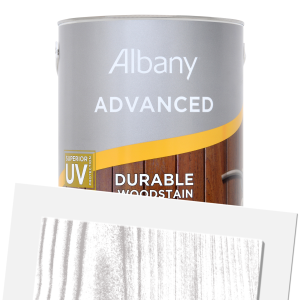
- Albany Woodcare Advanced is a durable woodstain for doors, windows and conservatories, giving a satin finish with superior UV protection.
Albany Original
and Advanced used as a system provide greater protection than either product alone: Albany Original
forms a firm bond as a base coat on bare wood, and its matt finish creates a
strong key for an Albany Advanced topcoat. The recommended application is one
base coat of Albany Original followed by two topcoats of Albany Advanced.
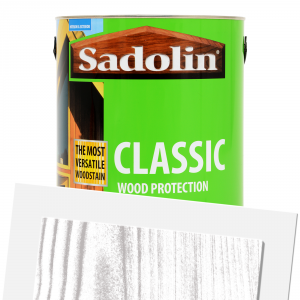
- Sadolin Classic Wood Protection is a deep-penetrating, matt-finish protection for interior and exterior timber, ideal for large areas such as cladding, fascias, decking and garden furniture.
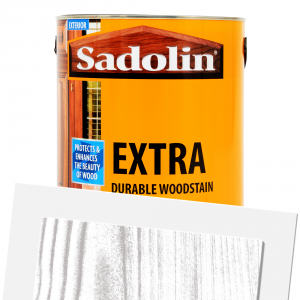
- Sadolin Extra Durable Woodstain is a professional-quality, satin finish woodstain for doors, windows and joinery. Best used as a topcoat, it’s water-repellent and resists flaking, peeling and blistering.
Sadolin Classic and Sadolin Extra can be used as a system. Sadolin Classic can be used as a basecoat followed by a recommended application of two topcoats of Sadolin Extra.
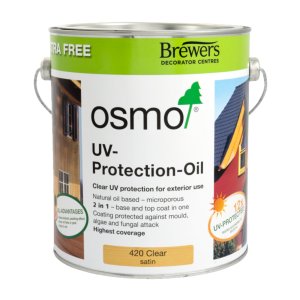
Osmo UV-Protection-Oil gives a microporous finish
that won’t crack, flake, peel or blister. It’s water and dirt resistant and
ideal for windows, doors, cladding and fencing.
Opaque Woodstains
- Albany Masterdec is a long-lasting, self-priming and self-undercoating exterior protection with a microporous, satin, opaque finish.
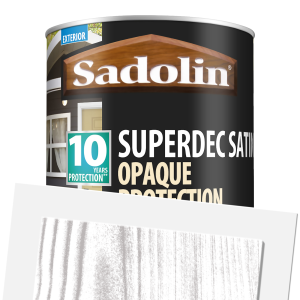
- Sadolin Superdec is a self-priming and self-undercoating woodstain suitable for windows, doors, fences, cladding and weathered plastic, giving an opaque finish.

FAQs
How long does woodstain last on a garden fence?
Durability
depends on the product, exposure and prior preparation, but a well-prepared
surface finished with a quality woodstain system — such as Albany Original as a
base coat with Albany Advanced topcoats — will generally protect exterior wood
for several years before recoating is needed.
Can I apply woodstain in cold or wet weather?
No. Woodstain
should be applied within the manufacturer's stated temperature range, and only
when there is enough dry time before rain is forecast. Applying in unsuitable
conditions can prevent the product from curing properly and reduce its
protective performance.
Do I need to sand wood before staining it?
Yes, in most
cases. Wet-abrading or sanding the surface improves adhesion and reduces dust,
and is a recommended preparation step before applying any woodstain.
What's the difference between woodstain and paint for garden wood?
Woodstain
penetrates more deeply into the timber than paint, which makes treated surfaces
more resistant to cracking, peeling and fading over time.
Give Your Fences And Decking A Fresh New Look
Protecting your fences and decking with the right woodstain
is one of the simplest ways to keep your garden looking sharp through the
colder months and beyond. Good preparation sets the foundation for a lasting
finish, while choosing a product suited to your surface ensures long-term
protection against weather, rot and UV damage.
Browse our full range of exterior woodcare products online
or visit your local Brewers store for expert advice on choosing the right
product for your project.
Related