

 Store locator
 Favourites
 Account


How To Restore Wooden Floorboards With Osmo Oil
June 15th, 2026
 Share
Share
-
 Email
Email
-
 Facebook
-
To restore wooden floorboards with Osmo Oil, first remove the old finish, repair any gaps and imperfections, sand the timber smooth and remove all dust. You can then apply Osmo Polyx-Oil in thin coats, allowing sufficient drying and curing time between coats.

What do you need to restore wooden floorboards?
- Floor scraper or
chisel
- Hammer
and nail punch
- Vacuum
cleaner and cloths
- Industrial
floor sander or electric sander
- Sandpaper
(40, 80 and 120 grit)
Repairs
- Pine
slivers (6–8mm)
- Wood glue
- Osmo Wood
Filler
- Osmo Gap Sealer
Finishing
- Osmo Polyx-Oil (or
preferred Osmo finish)
- Osmo Floor Brush
- Lint-free
cloths

How do you choose an Osmo finish for wooden floors?
This will depend on the look you want to achieve and the practicality of upkeeping your floorboards. Read more about how to decide on a finish for your wooden floors.

How do you prepare wooden floorboards for restoration?
- Remove loose filler and debris
- Sink or remove nails and screws
- Check the floor for damage

How do you sand wooden floorboards?
There are two options for sanding your floorboards: an industrial sander or a hand/electric sander. The cost can be similar for hiring an industrial sander or buying two hand sanders, so really this is about what suits your needs.
Using An Industrial Floor Sander
- This is the quickest option to complete your project
- Industrial sanders can only be hired for a day at a time so consider how much time you can allocate to the project. If you’re planning to complete the project over a few days or weeks, an electric sander might be the better option.
- If you do use an industrial sander, make sure you’re confident using it as the machine can be aggressive and possibly damage the surface if not used correctly.
Tip: Sand diagonally to the floorboards rather than straight along them to help level the floor more effectively.
Use An Electric Sander
- This option takes a lot more time and work to sand the surface.
- It’s best to start with 40 grit sandpaper and then move to an 80 grit.

How Do You Fill Gaps Between Floorboards?
Once the old finish is removed, you'll clearly see any gaps between boards.
You can leave these unfilled if you want to, but best practice is to fill these to exclude drafts, help with noise, and to keep out pests from under your floorboards.
Using Pine Slivers
To fill the gaps between floorboards:
- Cut 6–8mm pine slivers to size.
- Apply wood glue to both sides.
- Hammer firmly into gaps.
- Ensure each sliver is slightly larger than the gap for a tight fit.
After The Glue’s Dried
- Trim any excess with a chisel.
- Leave a small amount proud of the surface if necessary.
Follow-Up Sanding
Once repairs are complete, sand the floor again using 80 grit paper to level everything perfectly.

How Do You Repair Holes and Imperfections In Floorboards?
Use the Osmo Wood Filler to fill the pine boards. This product dries lighter than how it looks in the pot, so if you are unsure between two shades, we suggest going with the darker shade.
This filler is a solvent-free interior wood filler which is ideal for spot patching and trowel filling interior wooden surfaces. It sets to all woods, screws and nail heads with a drying time of 30 minutes.
How Do You Seal The Gaps Around Skirting Boards?
You’ll want to fill the gap between your skirting boards and the floorboards to help with drafts that come from your wall cavities and to ensure the edges look neat and finished.
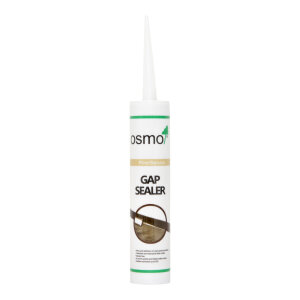
Use Osmo Gap Sealer in the same colour you selected for the floorboards and filler. Ideal for use when filling, fixing and repairing splits and gaps as well as sealing and filling joints on both finished and unfinished wood flooring, door thresholds and skirting. It can be treated with Osmo finishes after 1 hour.

How Should You Prepare The Floor Before Applying Osmo Oil?
You’ll now want to sand the surface with a 120 grit sandpaper. This smooths the surface to give you the best finish.
You want to make sure that your surface is free of any remaining dust. If dust isn’t properly removed it can get trapped in the finish and permanently sealed into the surface, leading to a slightly gritty feel, visible specks, and an uneven or patchy appearance.

How do you apply Osmo Polyx-Oil to wooden floors?
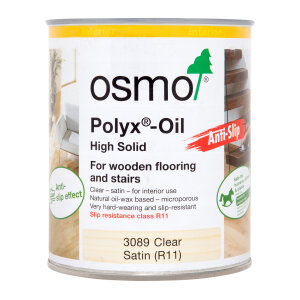
Osmo Polyx-Oil should be applied in thin, even coats to a clean, sanded wooden floor. Work the oil into the grain rather than leaving a thick layer on the surface. Applying too much product, particularly to absorbent softwoods such as pine, can result in a patchy or sticky finish.
Before you start, make sure the floor is thoroughly sanded and free from dust.
Step 1: Stir the oil
Stir the Osmo Polyx-Oil thoroughly before use. Avoid shaking the tin, as this can introduce air bubbles into the product.
Step 2: Apply a thin first coat
Apply a very thin coat using an Osmo Floor Brush or suitable lint-free cloth. Work in manageable sections and follow the direction of the wood grain.
The finish should look as though the timber has been lightly coated rather than flooded with oil. This is particularly important when working with absorbent softwoods such as pine.
For the best results, apply the oil thinly with the Osmo Floor Brush, allow it to penetrate for around 10–15 minutes and then remove any excess with a clean cloth. Leaving excess oil on the surface can result in a sticky or uneven finish.
Step 3: Allow the oil to dry
Allow the first coat to dry fully before applying another coat. Drying times can vary depending on the product used and environmental conditions, so always follow the manufacturer's instructions.
Step 4: Apply a second coat
Once the first coat is dry, apply a second thin coat using the same method. Most pine floors will require two coats, although the required number of coats can vary depending on the product, timber and finish you want to achieve.
Step 5: Allow the floor to cure
Don't confuse drying with curing. A floor may feel dry enough to walk on before the finish has reached its full hardness. Allow the finish to cure fully before subjecting it to heavy use, moving heavy furniture across it or carrying out wet cleaning.
Top tip: With Osmo Polyx-Oil, less is more. Thin coats and thorough preparation are key to achieving an even, durable finish.
Quick Summary of How To Restore Your Floorboards
- Prepare and clean the floor.
- Sand using 40-80 grit.
- Fill floorboard gaps with pine slivers.
- Apply Osmo Wood Filler to holes and cracks.
- Seal around skirting boards.
- Final sand with 120 grit.
- Vacuum thoroughly.
- Apply two thin coats of Osmo Polyx-Oil.
- Allow proper curing before heavy use.
- Following these steps will help you achieve a durable, professional-looking finish while preserving the natural character of your wooden floors.
Alternate Products For Other Finishes


Related
